

In industrial design and mechanical engineering, few factors are as influential—and as misunderstood—as the coefficient of friction. Whether you’re developing braking systems, clutches, industrial equipment, or precision components, understanding how materials behave under frictional forces is critical to performance, durability, and safety.
At Protec Friction Group, friction isn’t just a physical property—it’s a performance variable that must be engineered, controlled, and optimized. Selecting the right materials with high friction coefficients or materials with low coefficient of friction can determine whether a system operates reliably for years or fails prematurely under stress.
This guide explores how the friction coefficient of materials works, why it matters, and how manufacturers can make better decisions through informed material selection.
What Is the Coefficient of Friction?
The coefficient of friction (COF) is a dimensionless value that represents the ratio between the force required to move one surface across another and the normal force pressing them together. Simply put, it quantifies how much resistance occurs when two materials interact.
There are two primary types:
- Static coefficient of friction – Resistance before movement begins
- Kinetic coefficient of friction – Resistance during motion
Both values are essential in mechanical applications, but their importance depends on system design. In braking systems, for example, static friction is critical during initial engagement, while kinetic friction governs continuous stopping power.
Understanding the friction coefficient of materials allows engineers to predict behavior under load, temperature changes, pressure, and environmental exposure.
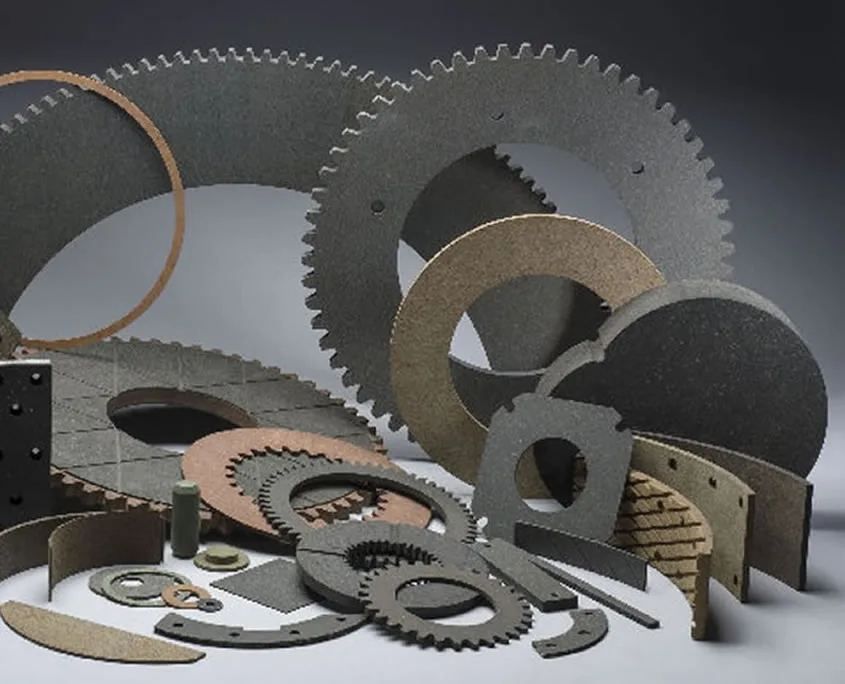
Why Friction Matters in Industrial Applications
Friction is not inherently good or bad—it must be controlled. In some applications, high friction is required to transmit torque or stop motion. In others, low friction is essential to reduce wear and improve efficiency.
When High Friction Is Necessary
Applications requiring materials with high friction coefficients include:
- Brake pads and braking assemblies
- Clutch systems
- Industrial holding mechanisms
- Anti-slip surfaces
In these systems, higher friction ensures strong grip, improved stopping power, and stable engagement. However, excessive friction without proper material engineering can lead to heat buildup, accelerated wear, and component failure.
When Low Friction Is Required
Materials with low coefficient of friction are critical in:
- Bearings and bushings
- Conveyor systems
- Sliding components
- High-speed mechanical assemblies
Low-friction materials reduce energy loss, minimize wear, and extend equipment lifespan. The goal is smooth motion with minimal resistance.
Protec Friction Group develops friction solutions tailored to these distinct operational needs, ensuring that each material performs reliably within its intended environment.
Materials With High Friction Coefficients
Certain materials naturally generate higher friction due to surface texture, composition, and mechanical interaction properties.
Common high-friction materials include:
- Sintered metallic compounds
- Ceramic-based composites
- Organic friction compounds
- Specialized resin-bonded materials
These materials are engineered to maintain stable friction across varying temperatures and pressures. In braking systems, consistency is just as important as peak friction value. A material that delivers unpredictable friction under heat stress can compromise safety.
High-friction materials must also manage thermal dissipation effectively. As friction increases, heat generation rises proportionally. Proper compound design ensures that the friction coefficient remains stable rather than fading under extreme conditions.
Protec Friction Group focuses on developing advanced friction materials that maintain performance integrity even in demanding industrial and automotive environments.
Materials With Low Coefficient of Friction
In contrast, low-friction materials are designed to minimize resistance and wear. These materials are often self-lubricating or engineered to reduce surface adhesion.
Common low-friction materials include:
- PTFE-based composites
- Engineered polymers
- Graphite-infused materials
- Bronze alloys with lubrication properties
Low-friction materials are essential where continuous motion occurs. Reducing the coefficient of friction lowers operational energy requirements and extends service life.
However, selecting a material solely because it has a low COF can be a mistake. Load capacity, temperature tolerance, chemical resistance, and wear characteristics must also be evaluated.
At Protec Friction Group, material selection is never based on friction value alone. Every formulation considers the full performance envelope of the application.
Factors That Influence the Friction Coefficient of Materials
The friction coefficient of materials is not a fixed number. It changes depending on environmental and mechanical conditions.
- Surface Roughness
Rougher surfaces increase mechanical interlocking, which raises friction. - Temperature
As temperature rises, materials may soften or glaze, altering friction behavior. - Pressure and Load
Higher loads can increase real contact area, modifying friction response. - Speed of Motion
Dynamic systems may show different friction values at varying speeds. - Environmental Conditions
Moisture, dust, oil, and contaminants significantly impact friction performance.
Understanding these variables allows engineers to predict real-world performance instead of relying solely on laboratory values.


Engineering Friction for Performance
Friction engineering is not about choosing extremes. The most effective solutions balance friction, durability, noise control, heat resistance, and wear characteristics.
Protec Friction Group approaches friction material development through:
- Controlled compound formulation
- Precision manufacturing processes
- Performance testing under simulated operating conditions
- Continuous quality verification
Rather than relying on generic material properties, friction components are engineered for application-specific demands.
For example, a braking application in heavy industrial machinery requires different friction behavior compared to light-duty automotive use. Each scenario demands a tailored friction profile.
Balancing Durability and Efficiency
One of the most significant challenges in friction engineering is managing wear. High friction increases grip but may accelerate surface degradation. Low friction improves efficiency but may reduce holding power.
The goal is achieving predictable, stable friction over the product’s operational life.
Advanced friction materials incorporate:
- Reinforcement fibers for structural stability
- Heat-resistant binders
- Metallic additives for thermal conductivity
- Surface conditioning treatments
By integrating these elements, friction materials deliver consistent performance without compromising longevity.

Why Precision Friction Solutions Matter
In modern manufacturing and automotive systems, performance margins are tight. Equipment must operate reliably under increasingly demanding conditions.
A miscalculated coefficient of friction can result in:
- Reduced safety margins
- Increased maintenance costs
- Energy inefficiency
- Premature component failure
By understanding materials with high friction coefficients and materials with low coefficient of friction, manufacturers gain better control over system reliability.
Protec Friction Group provides engineered friction solutions designed to meet strict performance standards while maintaining long-term durability.
Frequently Asked Questions (FAQ)
- What is the ideal coefficient of friction for industrial applications?
There is no universal ideal value. The correct coefficient of friction depends on the specific application, load, speed, and environmental conditions. Engineering evaluation is required to determine optimal performance. - Do materials with higher friction wear out faster?
Not necessarily. Properly engineered high-friction materials are designed to manage heat and resist degradation. Wear depends on compound composition, operating temperature, and load conditions. - Can the friction coefficient change over time?
Yes. Surface wear, contamination, glazing, and temperature cycling can alter friction characteristics. That’s why long-term performance testing is critical. - Why is low coefficient of friction important in moving parts?
Lower friction reduces energy loss, limits wear, and improves operational efficiency in continuously moving systems such as bearings and sliding components. - How does temperature affect friction performance?
High temperatures can soften certain materials or cause surface glazing, reducing friction stability. Advanced friction materials are engineered to maintain consistent performance under thermal stress.
Final Thoughts
Understanding the coefficient of friction is fundamental to designing reliable mechanical systems. Whether selecting materials with high friction coefficients for braking performance or materials with low coefficient of friction for smooth motion, informed material choice directly impacts durability, efficiency, and safety.
At Protec Friction Group, friction engineering is approached with precision, performance validation, and long-term reliability in mind. By aligning material science with application-specific requirements, manufacturers can achieve consistent results in even the most demanding environments.
If your operation depends on friction performance, the right material selection is not optional—it’s essential.
Tags: Coefficient of Friction, Friction Coefficient of Materials, Materials With High Friction Coefficients, Materials With Low Coefficient of Friction