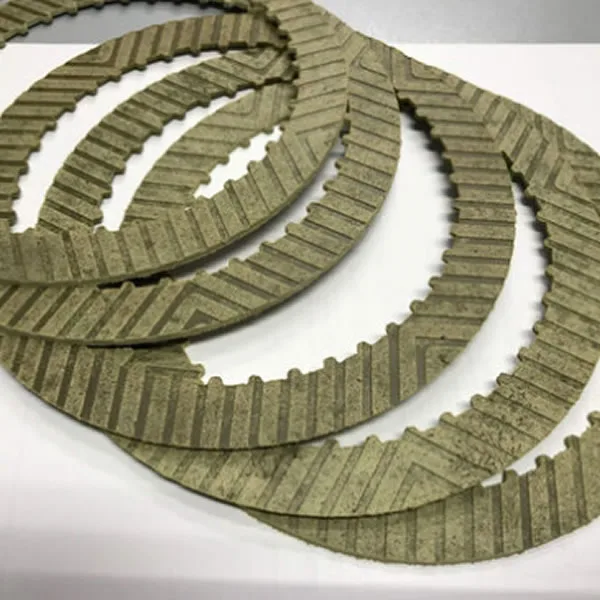
TF1700 is a high-performance material containing a significant percentage of Kevlar (aramid fiber) with metallic content. TF1700 virtually eliminates clutch slippage with a high torque capacity that avoids uncontrollable glazing. Additionally, TF1700 exhibits extraordinary wear life properties and has a high friction coefficient. When given a mating surface, clutch flywheel, brake rotor, or brake drum, it will dramatically outlast organic friction wear performance. TF1700 is completely non-abrasive against mating surfaces, promotes smooth engagement, resists very high surface pressures at the brake interface, and is an effective alternative for sintered materials since it handles high energy inputs in both dry and oil-immersed applications. TF1700 is available in sheets and in finished custom shapes and sizes, with thicknesses as low as 0.5mm.

- Home
- About
- Materials
- Kevlar
- Injection Molded
- Organic
- TF600 HD Metallic Woven Brake Lining
- TF1200G Organic Friction Material
- TF1425 Semi-Metallic Brake Lining
- TF1820 Molded Brake Lining For Gears
- TF1890 Molded Brake Lining For Gears
- TF2000 Organic Clutch Facing Material
- TF2016 Aramid Clutch Facing Material
- TF2025 Organic Metallic Clutch Material
- TF2400 Semi-Metallic Friction Material
- TF3080 Semi-Metallic Friction Material
- TF3400 Semi-Metallic Friction Material
- Sintered
- Woven
- Carbon/Graphite
- Other
- Markets
- Services
- Products
- Publications
- Contact Us