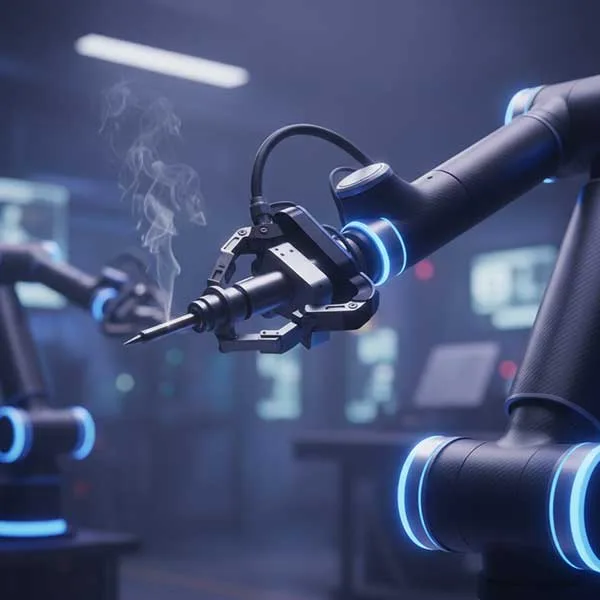
Precision robotic braking systems operate in environments where performance consistency is not a preference but an absolute engineering requirement. Industrial and collaborative robots depend on their braking systems to hold position accurately, stop motion predictably, and engage and release repeatedly across millions of cycles without introducing variability that would compromise the precision the application demands. The friction material at the center of these braking systems has an outsized influence on whether all of those performance requirements are met simultaneously, and finding a material that satisfies every specification without compromise is a genuine engineering challenge that most friction material suppliers are not equipped to solve.
A leading international robotics manufacturer came to ProTec with a detailed set of specifications for custom friction material needed in precision robotic braking applications. Their requirements covered every dimension of performance that matters in a demanding robotics environment. Low noise operation was essential to meet the acoustic expectations of modern automated facilities and collaborative robot deployments where equipment operates in close proximity to people. Dust-free performance was required to protect sensitive electronic and mechanical components from contamination that could compromise the broader system. Smooth engagement characteristics were necessary to ensure that braking events did not introduce shock or vibration into the robotic system that would affect positioning accuracy or mechanical longevity. Rapid disengagement was needed to support the high-cycle operation that robotic systems demand. Minimal break-in requirements were specified to reduce the time and cost associated with commissioning new equipment and replacing components in the field. And consistent coefficient of friction across all operating conditions was required to ensure that braking torque remained predictable regardless of temperature, humidity, load variation, or the accumulated wear history of the component.