
Railroad emergency braking systems represent one of the most safety-critical applications in the friction materials industry. When an international rail car manufacturer needed to develop specialized friction materials for emergency railroad braking systems with a strict requirement for North American sourcing, they turned to ProTec’s friction material engineering team to lead the development process from the ground up.

Emergency braking applications in rail demand friction materials that perform consistently and reliably under extreme conditions. Unlike standard service braking, emergency brake systems must deliver maximum stopping force on demand, often after extended periods of inactivity, across a wide range of speeds, loads, and environmental conditions including rain, snow, ice, and temperature extremes. The friction material must maintain stable performance characteristics without fade, glazing, or unpredictable behavior precisely when reliable operation matters most. North American sourcing requirements added an additional layer of complexity, requiring ProTec to work within a qualified domestic supply chain while still achieving world-class material performance.
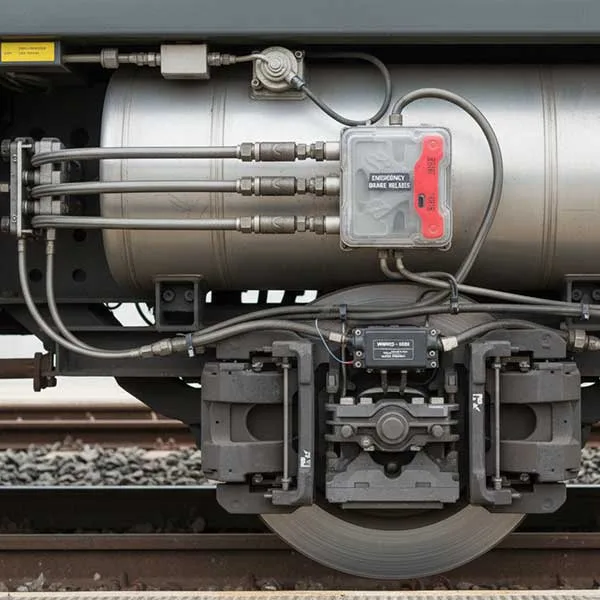
ProTec’s friction material engineers approached the challenge with a disciplined development methodology. The team designed, prototyped, and conducted dynamometer testing on twelve distinct friction material formulations, each engineered with different base compounds, reinforcement fibers, lubricant packages, and binder systems to evaluate how varying the chemistry and composition affected stopping performance, wear rates, thermal behavior, and noise characteristics under simulated emergency braking conditions. Dynamometer testing provides controlled, repeatable data that allows engineers to make precise comparisons across formulations before committing to the expense and complexity of full-scale field testing.

Working in close collaboration with the client’s railway engineering team, ProTec narrowed the twelve candidate materials down to two high-performance formulations that demonstrated the most promising combination of performance, consistency, and durability. Both materials are currently undergoing extensive field testing in real-world rail operations, a necessary and rigorous phase of the qualification process for any safety-critical rail application. Final train testing protocols are actively being developed as the program moves toward certification and production readiness. Based on the strength of ProTec’s engineering contributions throughout this program, the client has already awarded additional brake engineering projects to our team, reflecting the trust that comes from demonstrated technical capability and collaborative problem-solving in demanding transportation applications.

Contact Us

Railroad Emergency