
Hydraulic braking systems in construction equipment operate in some of the most demanding environments that friction materials are ever asked to perform in. Heavy construction vehicles subject their braking components to extreme mechanical loads, continuous vibration, abrasive dust and debris, wide temperature swings, and the relentless demands of job site duty cycles that would quickly expose any weakness in material selection or engineering design. When an inventor developing a novel high-pressure hydraulic actuator system for construction vehicles needed a friction material capable of meeting these extreme requirements, ProTec’s brake engineering team was brought in to identify the right solution.

The application centered on high-pressure hydraulic actuators, a design approach that concentrates significant clamping force into a compact braking mechanism. This type of system demands a friction material with exceptional compressive strength and the ability to maintain a stable and predictable coefficient of friction under pressures that would cause conventional brake materials to deform, glaze, or fail prematurely. Standard friction materials developed for automotive or light industrial use are simply not engineered for this class of mechanical stress, making material selection a critical factor in whether the actuator system would perform as designed in real-world construction conditions.
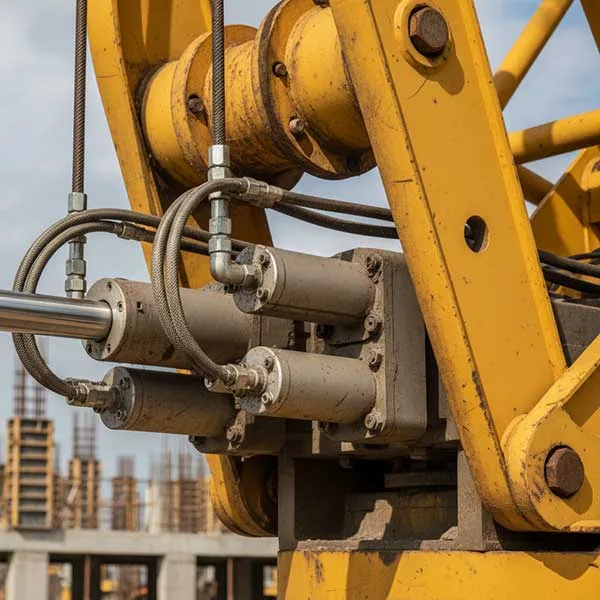
After evaluating the specific pressure ranges, operating temperatures, and performance requirements of the hydraulic actuator design, ProTec’s brake engineers recommended TF1700, a Kevlar-based semi-metallic friction material specifically engineered for extreme pressure braking applications. The semi-metallic composition of TF1700 provides the structural integrity and thermal conductivity needed to handle high compressive loads without sacrificing the friction stability and wear resistance that long service life in construction equipment demands. Kevlar reinforcement contributes tensile strength and heat resistance while helping to control wear rates and maintain consistent friction characteristics across varying load and speed conditions. The combination of these properties made TF1700 a logical fit for an application where both performance and durability under extreme mechanical stress were non-negotiable requirements.

Field testing of the high-pressure hydraulic actuator system equipped with ProTec’s TF1700 friction material is ongoing, with results to date showing positive performance in heavy construction equipment operating conditions. As the testing program continues to accumulate real-world data across a range of construction applications and duty cycles, ProTec’s engineering team remains engaged with the development process, supporting the inventor’s path from prototype validation toward a production-ready braking solution built on proven friction material technology.

Contact Us

High-Pressure_