
Brake rotor engineering for passenger rail applications requires a level of metallurgical expertise and precision manufacturing capability that goes well beyond what most brake component suppliers can offer. Passenger railroad brake rotors must endure repeated high-energy stops across decades of service, performing reliably under demanding thermal and mechanical conditions while meeting strict safety standards and minimizing maintenance intervals. When an international passenger railroad car manufacturer needed to develop a proprietary cast iron brake rotor with improved performance and service life characteristics, they enlisted ProTec to lead the engineering and development effort.

ProTec approached the program by assembling a specialized cross-functional team with the depth of expertise the project demanded. Mechanical engineers, metallurgists, and carefully selected international manufacturing partners were brought together to form a cohesive development team capable of addressing every aspect of rotor design, materials science, manufacturing process, and performance validation. Coordinating this kind of multi-disciplinary team across engineering disciplines and international supply chain partners requires both technical leadership and project management rigor, and ProTec structured the program to ensure clear communication and accountability at every stage of development.
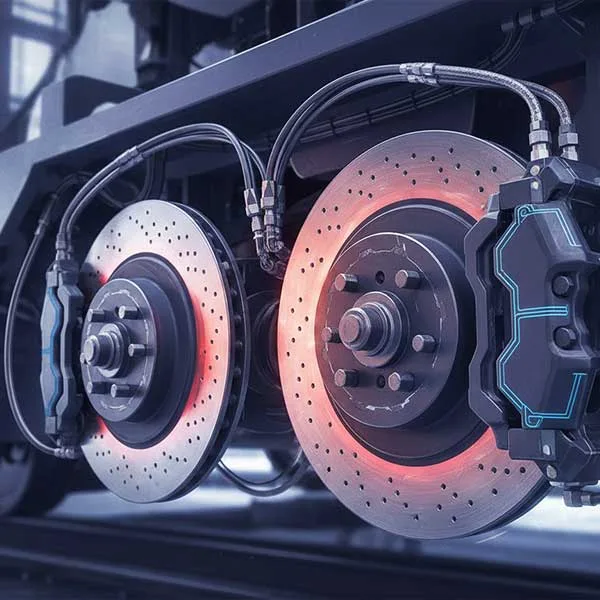
The engineering work centered on two significant design improvements that directly addressed the thermal and durability challenges inherent in passenger rail braking. The first was a comprehensive redesign of the rotor’s internal cooling vane geometry. Cooling vanes are the internal passages cast into a brake rotor that allow airflow to carry heat away from the rotor body during and after braking events. By optimizing the shape, orientation, and spacing of these internal vanes, ProTec’s engineering team achieved a measurable reduction in operating temperatures of fifteen percent compared to the baseline design. Lower operating temperatures translate directly into reduced thermal stress on the rotor, slower wear rates, improved friction material compatibility, and a longer overall service life, all of which are meaningful benefits in a passenger rail application where maintenance access is limited and component longevity is a significant factor in total cost of ownership.

The second major engineering contribution was the specification and implementation of a ferritic nitrocarburizing surface treatment for the cast iron rotor. Ferritic nitrocarburizing is a thermochemical surface hardening process that diffuses nitrogen and carbon into the surface layer of the metal, creating a hard, wear-resistant compound layer that significantly improves the rotor’s resistance to both surface wear and corrosion. Cast iron rotors without surface treatment are vulnerable to rust and surface degradation, particularly in the wet and variable weather conditions that passenger rail equipment regularly encounters. The ferritic nitrocarburizing treatment addresses this vulnerability directly, extending service life and maintaining consistent braking surface characteristics over a longer operational period.

Custom Brake

Prototype testing of the newly engineered rotor design was completed successfully, validating the thermal improvements and confirming that the ferritic nitrocarburizing treatment performed as expected under simulated service conditions. Production contracts are currently under development as the program moves toward full-scale manufacturing and fleet deployment. ProTec’s successful execution of this brake rotor development program reflects the company’s ability to bring together the right combination of engineering talent, metallurgical knowledge, and manufacturing partnerships to deliver custom braking solutions for the most demanding passenger transportation applications.